Framework Architecture
The framework accommodates the evaluation of a broad spectrum of assets, recognizing that risk exposures differ significantly based on each token's structural components and foundational risks.
Anchor Methodologies establish the starting point of each asset assessment in Probability of Default (PD) terms. The Anchor PD is then adjusted through a series of modifiers selected based on the asset type. Each metric below is presented with a brief definition, a description of how it is measured, and a tier table containing both the reasoning that supports each tier definition and the empirical evidence that backs the reasoning and the tiering thresholds.
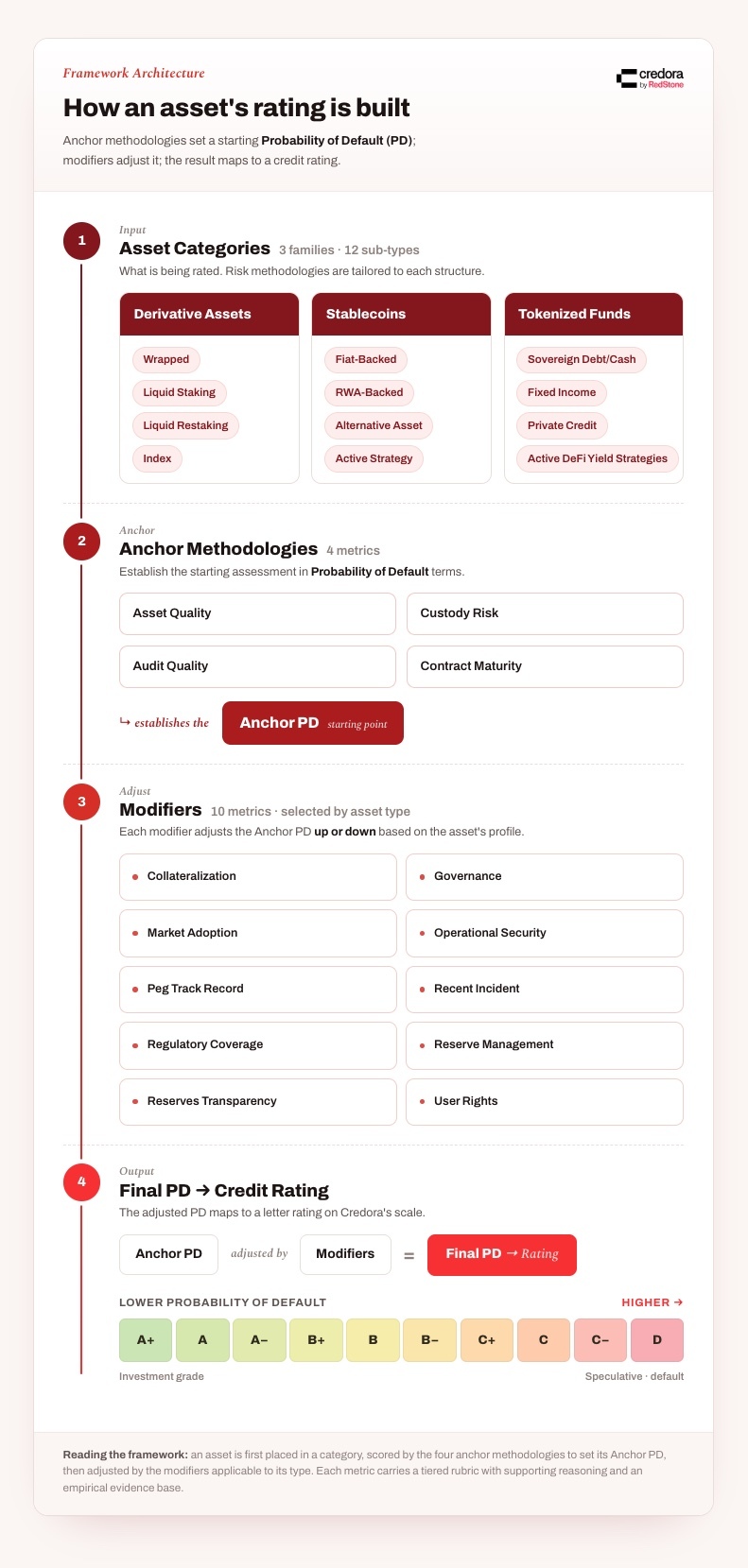
The framework is structured in three steps:
- Asset Categories — what is being rated. Risk methodologies are tailored to each structure across three families and twelve sub-types (Derivative Assets, Stablecoins, Tokenized Funds).
- Anchor Methodologies — four metrics (Asset Quality, Custody Risk, Audit Quality, Contract Maturity) establish the starting assessment in Probability of Default terms, producing the Anchor PD.
- Modifiers — selected by asset type, each adjusts the Anchor PD up or down based on the asset's profile. The result maps to a credit rating.